Menu

A Number on a Machine Doesn’t Prove Intoxication
When a breath test produces a result above 0.08, prosecutors treat it as the centerpiece of their case. Jurors focus on that number too.
But a breath test result is not a direct measurement of the alcohol in your blood, it’s an estimate. The machine measures alcohol in your deep lung air and then applies a mathematical assumption to convert that reading into a blood alcohol concentration or BAC. Every step in that process involves variables, assumptions, and potential sources of error that deserve examination before the result is accepted as reliable evidence.
At Denuna & Westbrook, PLLC, we examine breath test evidence the way it should be examined: as a scientific result that is only as reliable as the machine, the operator, the procedures, and the assumptions behind it.
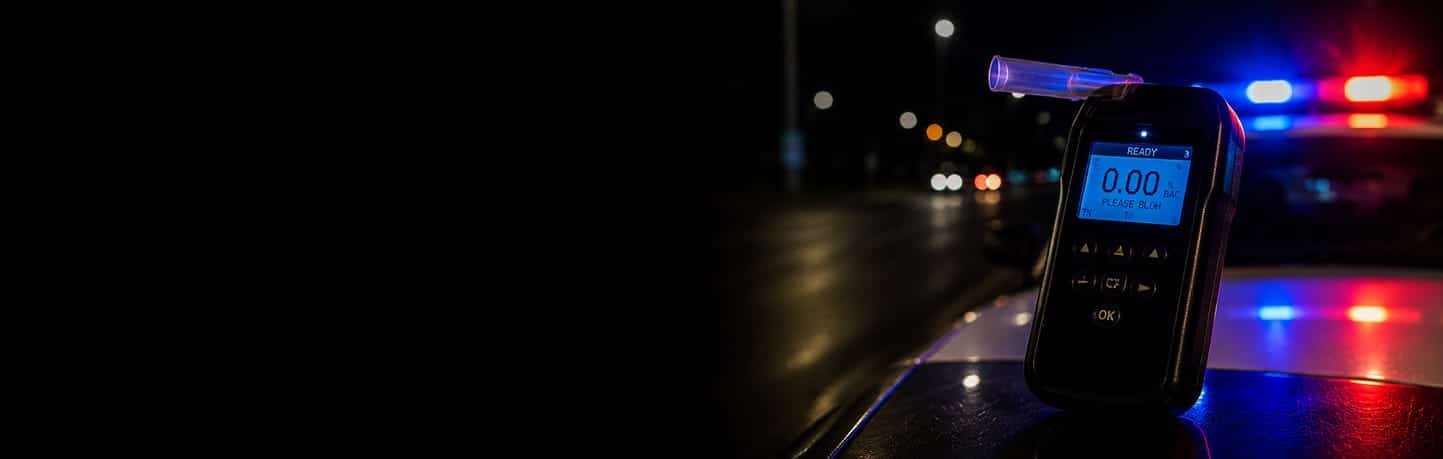
The Intoxilyzer 9000 is the breath testing instrument approved for evidentiary use in Texas DWI cases. When a person blows into the device, it measures the concentration of alcohol in their deep lung air, a sample drawn from the alveolar region of the lungs where gas exchange between air and blood occurs.
The machine doesn’t measure blood alcohol directly. It measures breath alcohol and then converts that reading into an estimated blood alcohol concentration using a fixed mathematical ratio called the “partition ratio”. That conversion is where the science gets complicated and where experienced defense attorneys start asking questions.
Every breath test result in Texas is built on a mathematical assumption called the partition ratio. In plain terms, the Intoxilyzer machine doesn’t directly measure the alcohol in your blood. It measures alcohol in your breath and then uses a fixed formula to estimate what's in your blood. That formula assumes a specific relationship between breath alcohol and blood alcohol (2,100 milliliters of breath equals one milliliter of blood) and applies it to every person, in every case, without exception.
No two people share the exact same partition ratio. Research shows the actual ratio ranges from roughly 1,700:1 to 2,400:1 across the population. The machine doesn’t measure your actual ratio on the night in question. It uses one fixed number for everyone. This gap matters and could be the difference between a conviction and an acquittal.
If your true ratio runs lower than the assumed average, the Intoxilyzer will report a higher BAC result, meaning a BAC of .09 could actually fall below the .08 threshold. Prosecutors never account for this. They apply the fixed assumption and present the number as though it were a precise measurement of your blood alcohol concentration. Our job is to make sure this assumption gets exposed, whether we’re negotiating with the prosecutor or presenting our case to a jury.
Texas law requires that breath testing instruments meet specific standards and that officers follow established procedures when administering the test. The Intoxilyzer 9000 must be properly calibrated, maintained, and certified. The operator must be trained and certified. And before collecting a breath sample, the officer must observe the subject for a continuous 15-minute period to ensure nothing enters the mouth that could contaminate the sample.
Each of these requirements creates a potential defense issue:
When any of these requirements aren’t met, the reliability of the result becomes a legitimate issue. A result produced by an improperly maintained machine, administered by an uncertified operator, or preceded by an inadequate observation period may be challengeable regardless of the number it produces.
Even when the Intoxilyzer 9000 is properly maintained and procedures are followed correctly, other factors can affect the reliability of the BAC result.
The Intoxilyzer is designed to measure deep lung air. If residual alcohol from the mouth, throat, or esophagus contaminates the sample, the result will be artificially elevated. This can occur when a subject has recently consumed alcohol, used mouthwash, belched, or regurgitated. The 15-minute observation period is supposed to prevent mouth alcohol contamination, but only if it is actually conducted continuously and documented properly.
The Intoxilyzer 9000 can be affected by radio frequency interference from police radios, cell phones, and other electronic equipment present during testing. When RFI is detected, the instrument is supposed to flag the result. When it isn’t detected, the interference may still affect the reading without triggering any alert.
Body temperature, breathing patterns, hematocrit levels, and certain medical conditions can all affect breath alcohol readings. A person with an elevated body temperature produces a higher breath alcohol reading than a person at normal temperature, even at the same true BAC. These variables are never measured or accounted for in the testing process.
When prosecutors present a breath test result, they present a single number. What they don't present is everything that number depends on: the partition ratio assumption, the calibration history of the instrument, the certification of the operator, the quality of the observation period, the absence of mouth alcohol, the absence of RFI, and the physiological characteristics of the individual being tested.
Each of those factors is invisible in the final result. Each can be examined through proper defense investigation. And each may reveal that the number presented in court is less reliable than it appears.
Challenging a breath test result effectively requires more than pointing out that the machine might be wrong. It requires understanding exactly how the Intoxilyzer 9000 works, what the maintenance and calibration records should show, where the testing procedures are most vulnerable, and how to present those issues in a way that makes sense to a jury.
Denuna & Westbrook, PLLC has challenged breath test evidence across a wide range of DWI cases, from results just above 0.08 to significantly elevated readings where the reliability of the instrument and the testing process remained genuinely in dispute. Chris Denuna has cross-examined breath test operators on their certification records, the instrument’s maintenance history, the conduct of the observation period, and the partition ratio assumptions built into every result the Intoxilyzer produces.
The goal in every breath test case is the same: take the number the State presents as conclusive and show the jury everything behind it that they weren’t told.
Is a breath test result proof that I was legally intoxicated?
No. A breath test result is an estimate based on assumptions that may not reflect your actual blood alcohol concentration. The result deserves scrutiny, not automatic acceptance.
What is the partition ratio and why does it matter?
The partition ratio is the mathematical assumption the Intoxilyzer uses to convert breath alcohol into an estimated blood alcohol concentration. The device applies a fixed 2100:1 ratio to everyone, but individual ratios vary significantly. A person whose actual ratio differs from the assumption may receive an inaccurate result.
Can the Intoxilyzer 9000 produce an inaccurate result?
Yes. Calibration issues, maintenance problems, mouth alcohol contamination, radio frequency interference, and physiological variables can all affect the reliability of a breath test result.
What is the 15-minute observation period?
Before administering a breath test, officers must observe the subject continuously for 15 minutes to prevent mouth alcohol contamination. Failures to conduct or properly document this observation period can affect the admissibility or reliability of the result.
If I blew above 0.08, will I be convicted?
No. Many breath test cases are successfully defended. A test result above 0.08 is just one piece of evidence. Its reliability depends on the machine, the operator, the procedures, and the assumptions behind it, all of which can be examined and challenged.
What if I refused the breath test?
Refusal creates its own set of consequences and its own defense issues. The officer will issue a Notice of Suspension at the scene, triggering the Administrative License Revocation process and starting the 15-day clock to request a hearing. If the reported BAC later comes back at 0.15 or higher through a blood warrant, the charge may be enhanced from a Class B to a Class A misdemeanor. And in many Texas counties today, a refusal triggers a blood warrant as a matter of routine.
Behind every breath test result is a machine, an operator, a set of procedures, and a mathematical assumption. Each one is a potential source of error. Denuna & Westbrook knows where to look, what to challenge, and how to make the result answer for itself.
We represent individuals facing DWI breath test cases throughout Houston and the Gulf Coast region, including Harris County, Fort Bend County, Montgomery County, Galveston County, Brazoria County, and Waller County.
Call 713-966-0253, email info@texasdwlaw.com, or reach out online to schedule a confidential consultation.
© 2026 Denuna & Westbrook, PLLC
| View Our Disclaimer | Privacy Policy
Law Firm Website Design by The Modern Firm